
Overview:
-
Create G/L Budgets
-
Export or Import Budgets with Excel
- Generate budgets automatically using AI Budget Forecast
-
View Real-Time Budgets in Purchase Order or Purchase Invoice
Note: The AI Budget Forecast feature is released via the Wiise app version 27.3.3.2
If you cannot see this feature in Wiise, please ask your IT admin to install the latest Wiise app updates.
Why Use G/L Budgets?
G/L Budgets help you plan, monitor, and control your business financial performance.
Plan and Monitor Financial Performance
You can plan expected financial results and compare budgeted and actual amounts across your chart of accounts or specific dimensions to support better financial decision making.
Generate Budgets Faster with AI Budget Forecast
The AI Budget Forecast feature automatically generates budget amounts by analysing historical financial data. This helps users create budgets faster, identify trends, and adjust the forecast before converting it into a G/L budget.
Control Spending with Real-Time Budget Views
Real-time budget views show how each purchase order or invoice affects the available budget. This helps users make informed decisions, prevent overspending, and maintain tighter financial control.
Note: You can view real-time budget availability from the FactBox panel on Purchase Orders and Purchase Invoices.
Before You Begin
-
You are assigned the Accountant or Business Manager role profile
-
Determine which Dimensions will be used for budgeting
-
Confirm your fiscal year setup in Accounting Periods.
- Ensure historical financial data exists when you plan to use AI Budget Forecast.
How to Create G/L Budgets?
You can create budgets in three ways:
-
Create a budget manually
-
Export and import budgets using Excel
-
Generate a budget using AI Budget Forecast
Note: You can copy an existing G/L Budget to create a new one.
1. Create a New G/L Budget Manually
-
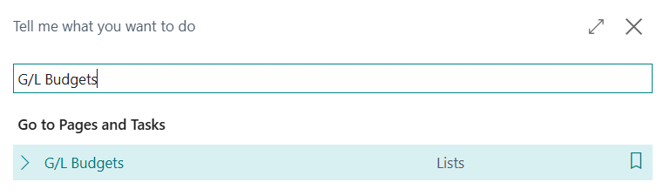
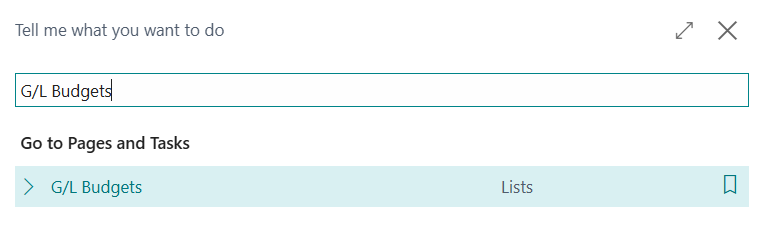
Search for G/L Budgets on the top right-hand corner of the page. Select the relevant link.
-
The G/L Budgets page displays.

-
Select +New or Edit List. Complete the Name, Description and Budget Dimension fields.
-
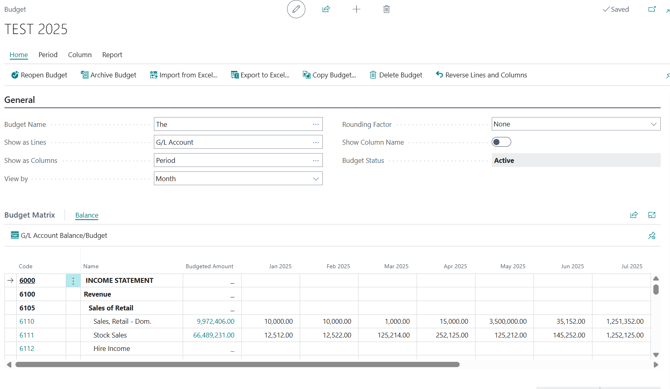
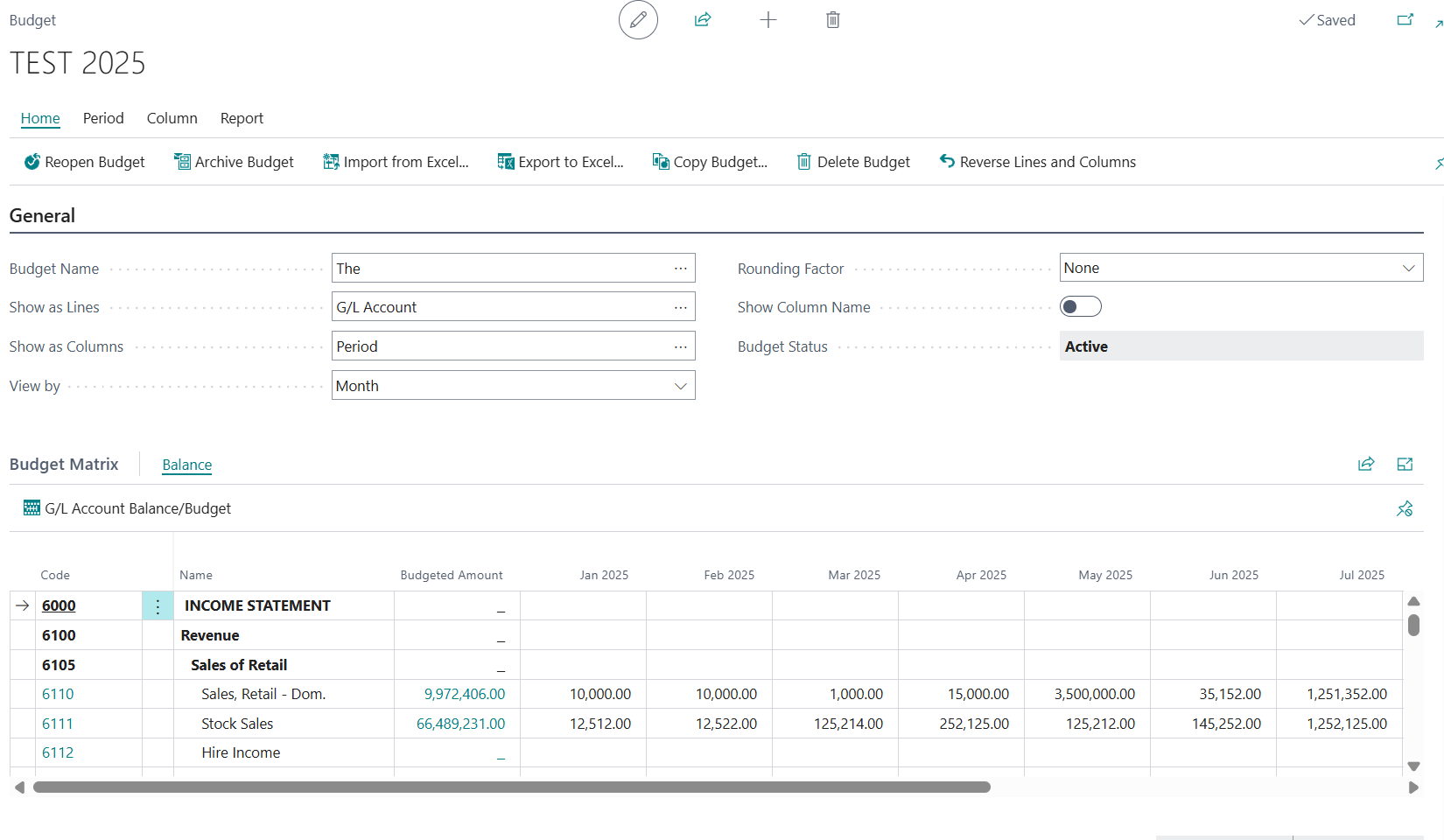
Select Edit Budget. The Budget Matrix displays. You’ll can see the General, Budget Matrix and Filter sections.
-
Select a cell to enter the budgeted amount for the month.
-
Repeat for each account and period as needed.
Note: The Budgeted Amount column field is auto updated.
Note: Use the the Filter section to filter the budget by dimensions, date or G/L account.
-
You’ve manually created a G/L Budget.

2. Export or Import Budgets with Excel
Here are the steps to export budgets with Excel:
-
Go to your G/L Budgets page. On the G/L Budget page, select your budget. Then, select Edit Budget.
-
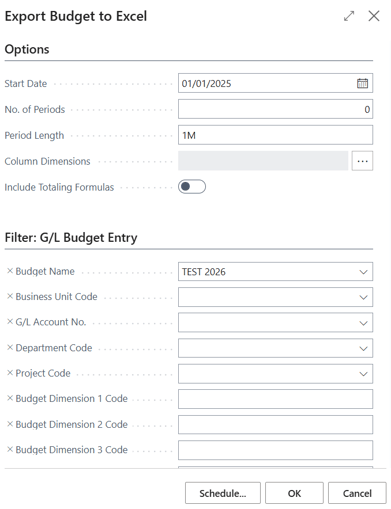
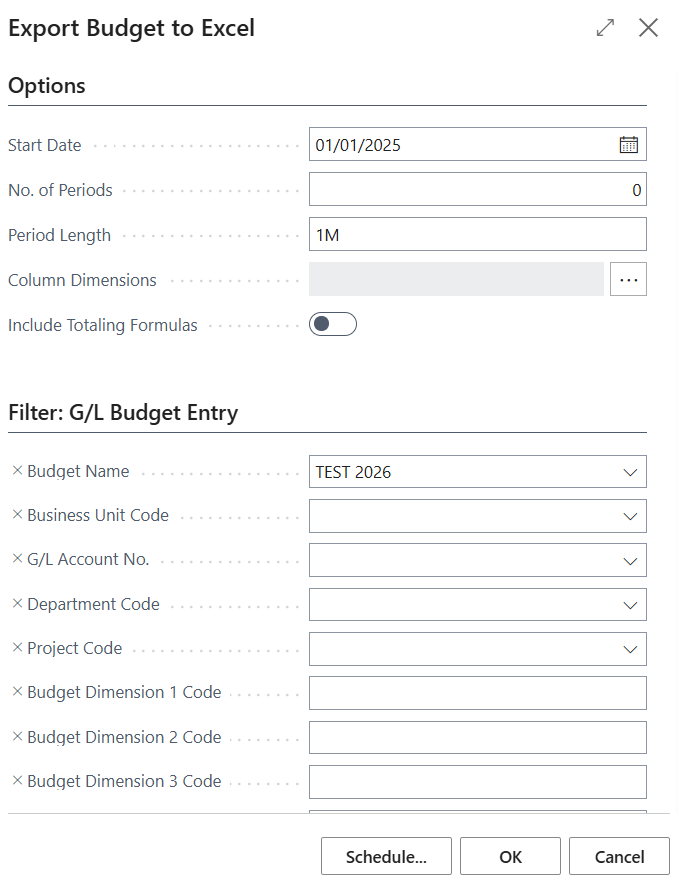
Select Export to Excel. The Export Budget to Excel request page displays.
-
Make your selection. Then, select OK to generate the Excel file.
Note: You can schedule the export so budget data is generated automatically.
Here are the steps to Import Budgets with Excel:
-
After you’ve edited the budget in Excel, return to the Budget page.
-
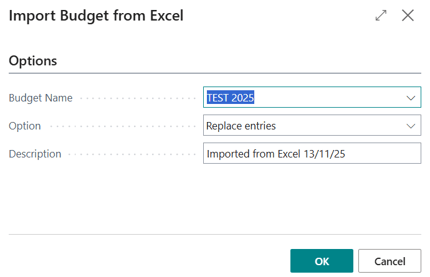
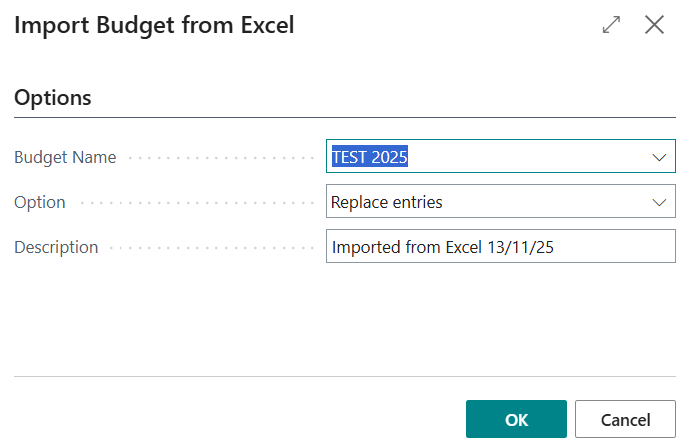
Select Import from Excel. The Import Budget from Excel request page displays.
-
Update the Options section. Then, select OK.
Note: You have the option to replace existing entries or add entries to your budget.
-
Select the file to add.
-
You’ve imported a budget in Excel.
-
You’ve created G/L Budgets.
3. Generate Budgets Using AI Budget Forecast
Here are the steps to generate G/L budgets using the AI Budget Forecast:
-
Go to your G/L Budgets page. You can create, copy or edit a G/L Budget.
- Select Create G/L Budget Forecast.
Note: The Create G/L Budget Forecast action, generates AI-driven forecast and creates a new budget in Draft status.
- The Generate G/L Forecast request page displays.
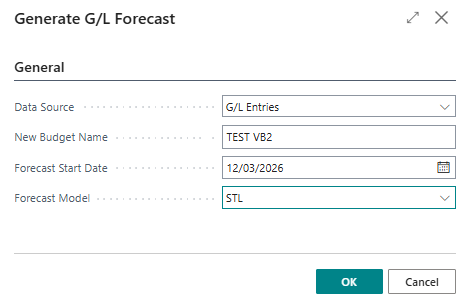
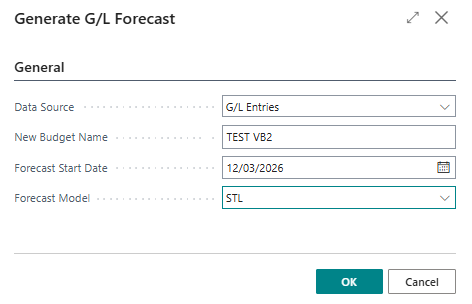
- Fill in the following fields:
- Data Source: You can use historical G/L entries or import data from Excel.
- New Budget Name: Assign a new budget name
- Forecast Start Date: Assign the date of forecast
- Forecast Model: Select the Model to use for forecasting: ARIMA (seasonal patterns), ETS (exponential smoothing), STL (seasonal decomposition), or combinations
- Select OK.
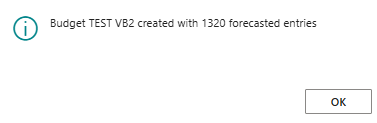
Note: The process analyses historical data and generated forecasted amounts. - A confirmation message displays that the G/L Budget is created with forecasted entries.
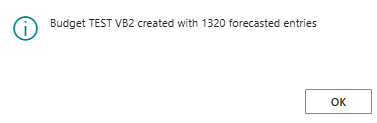
- Select OK to close the process.
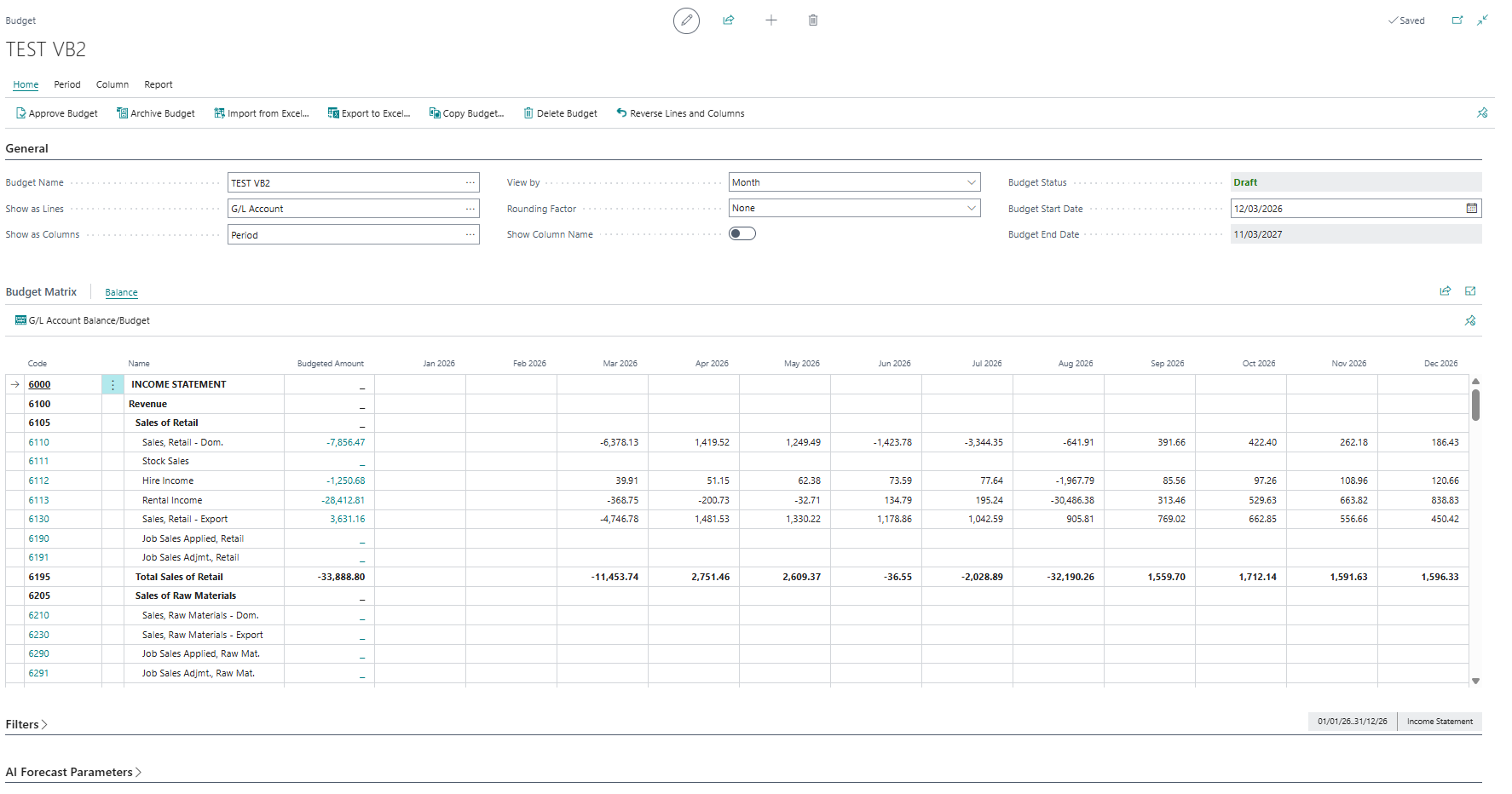
- Select the generated AI Budget Forecast.

- The AI Budget Forecast page displays.
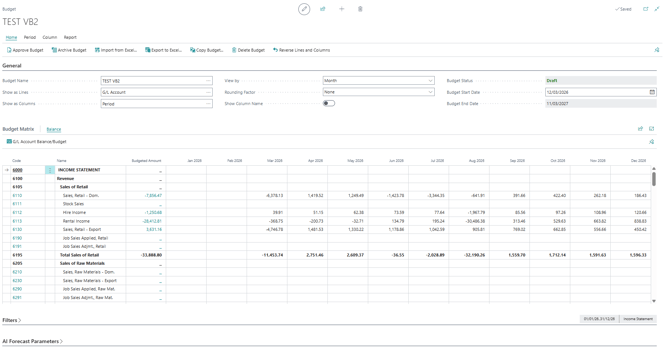
- You'll need to review the Budget Matrix section.
Note: The Budget Matrix section shows G/L accounts, forecasted values and forecast periods. - Adjust the forecast where required.
- Select Approve Budget to change the forecast into an Active Budget Status.

- The forecast is converted into an Active G/L Budget.
- You've created a G/L Budget using the AI Budget Forecast.



Note: Wiise allows you to check budget availability in real time using G/L Budgets and Dimensions, so you can verify whether a Purchase Order or Purchase Invoice will exceed the available budget before committing it.
To view this, expand the FactBox panel on your Purchase Order or Purchase Invoice page. This displays the allocated budget, current spend, and remaining balance to help you confirm the budget position before proceeding.
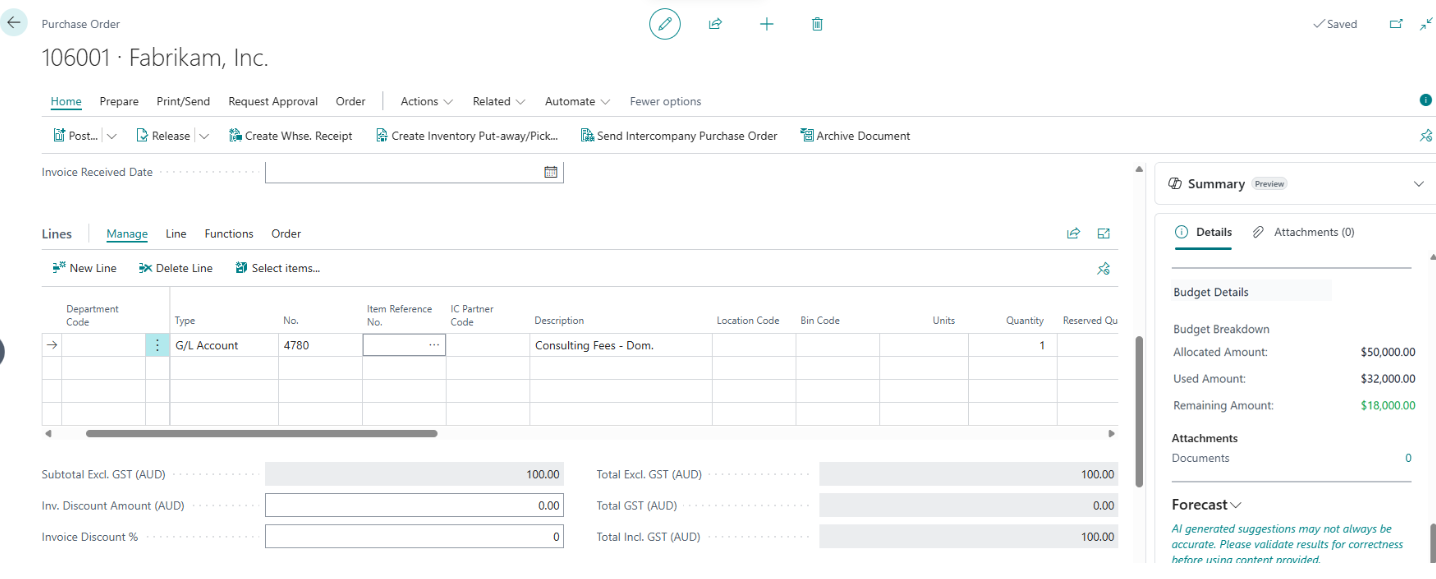
Note: When budgets are enabled, users can view real-time budget information that warns or blocks them when a purchase exceeds the available budget. You can also prevent users from posting purchasing documents that exceed budget by configuring approval workflows.
What’s next?
Find out how to set up approval workflows for purchasing documents.
If you have any questions, please reach out to support@wiise.com