
We’ve continued to expand Wiise with new dashboards and workflow controls that help customers improve visibility, reduce manual effort, and strengthen governance across sales, inventory, and finance.
New: Customer Profitability Dashboard (Sales Dashboards app)
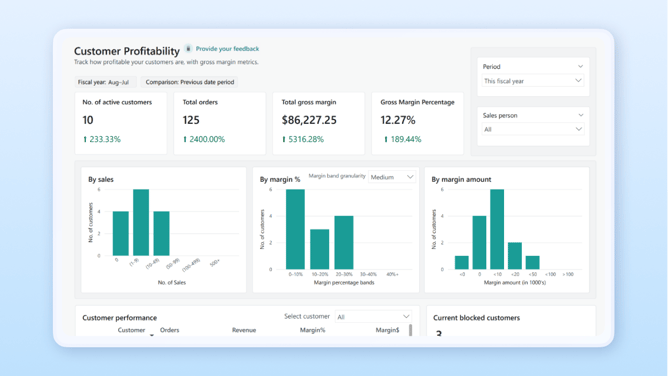
To give teams a clearer view of revenue, cost, and margin by customer, we’ve introduced the new Customer Profitability Dashboard in the Sales Dashboards app. Previously, understanding customer profitability often required exporting data into Excel or external BI tools, making it difficult to see true margin once discounts, returns, fulfilment costs, and service effort were included.
By delivering this in embedded Power BI, customers can interact with the data in real time making it easy to filter, drill into performance, and uncover insights faster, directly within Business Central. This supports smarter pricing and account decisions, stronger negotiations, and a sharper focus on profitable growth.
New: Item Profitability Dashboard (Sales Dashboards app)
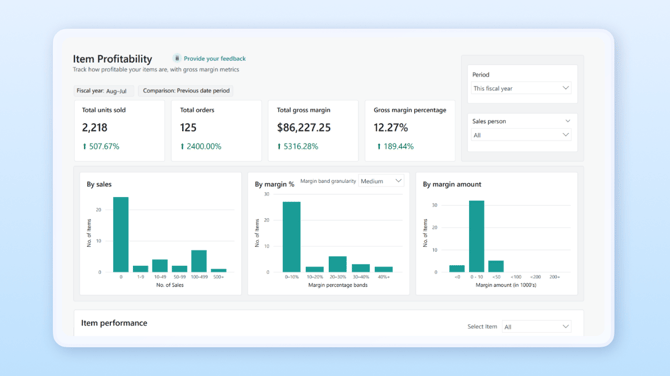
To help customers understand which products (SKUs) are driving profit and which are eroding margin. We’ve added the new Item Profitability Dashboard to the Sales Dashboards app. It brings together key profitability inputs such as COGS, discounts, freight, and returns to provide gross margin and margin % visibility at the item level. This replaces manual reporting and one-off analysis with a continuously updated view, supporting smarter pricing, better promotions, and more profitable inventory investment decisions.
New: Warehouse Item Journal Batch Approval Workflow
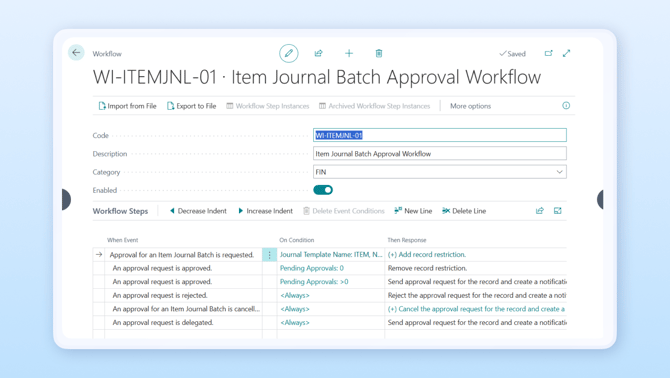
To help customers reduce inventory risk and strengthen internal controls, we’ve introduced the Warehouse Item Journal Batch Approval Workflow. This is similar to last month’s Item Journal Batch Approval Workflows but specifically designed for warehouse item journal batches.
Warehouse item journal batches can now be submitted for approval and cannot be posted until approved, ensuring adjustments are reviewed and authorised before impacting stock records. The workflow supports flexible approval conditions (such as value thresholds or location), multiple approver methods, notifications, delegation, and a full audit history helping customers reduce errors, enforce segregation of duties, and improve audit readiness.